CHAPTER 4 RESOURCES
Build Your Physical Foundation
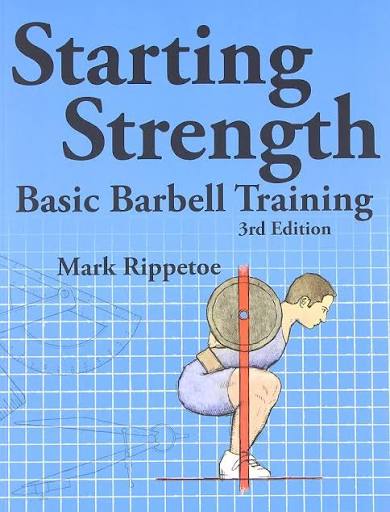
Starting Strength: Basic Barbell Training (3rd Edition)
Mark Rippetoe
Chapter 4 makes the case that strength training is the highest-return investment in your physical health, and that a small number of compound barbell lifts gets most of the benefit. This is the book I point to for learning how to do those lifts correctly.
Rippetoe covers five movements: the squat, press, deadlift, bench press, and power clean. Each gets a long, detailed chapter on setup, bar path, common errors, and how to fix them. The explanations lean on basic physics and anatomy, so you understand why a position is correct rather than just copying it. The book also lays out a simple novice program built on linear progression: lift a little more weight each session for as long as you can keep adding it.
It is dense, and you won’t absorb it in one read. Use it as a reference. Read the chapter for a lift before you start training it, then come back when something feels off. If you’re new to barbells, pair it with filming your sets from the side and comparing them to the book’s diagrams.
Best for: beginners who want a clear, technically sound starting point, and anyone who has lifted for a while without ever learning proper form.
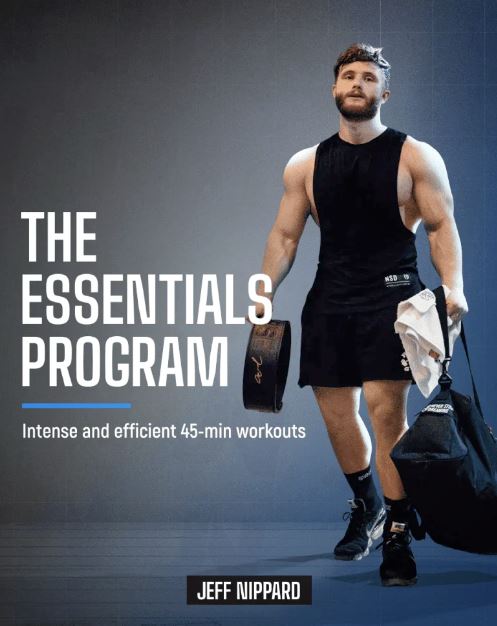
The Essentials Program
Jeff Nippard
Starting Strength teaches you how to lift. The Essentials Program answers a different question: how to make steady progress when you don’t have much time to train. It’s the program I recommend for busy people who want a complete, well-designed plan they can follow without having to think about it.
Every workout is built to fit in about 45 minutes, including the warm-up. There are versions for two, three, four, and five days per week, so you can pick the one that fits your schedule instead of rebuilding your week around the gym. Because the sessions are short, the program doesn’t rely on adding more sets over time. It relies on effort and on getting stronger at the same lifts, which Nippard calls “beating the logbook.” A tracking spreadsheet is included so you can record each session and see whether you’re actually improving.
The focus is building muscle, not maximal strength. That means more dumbbell and machine work than a pure barbell program. Nippard also explains the reasoning behind the program’s design and cites the research. If you like knowing why a plan works before you commit to it, that section is worth reading.
Best for: people with limited time who want a structured, evidence-based plan, and anyone who has finished a beginner strength program and wants to shift toward building muscle.